Counselling Code: 800
Run By St.Peter’s Institute of Higher Education and Research, Chennai
Affiliated to the Tamil Nadu Dr.M.G.R. Medical University, Chennai Tamil Nadu Nurses and Midwives Council, Chennai
Indian Nursing Council, New Delhi and Approved by Directorate of Medical Education
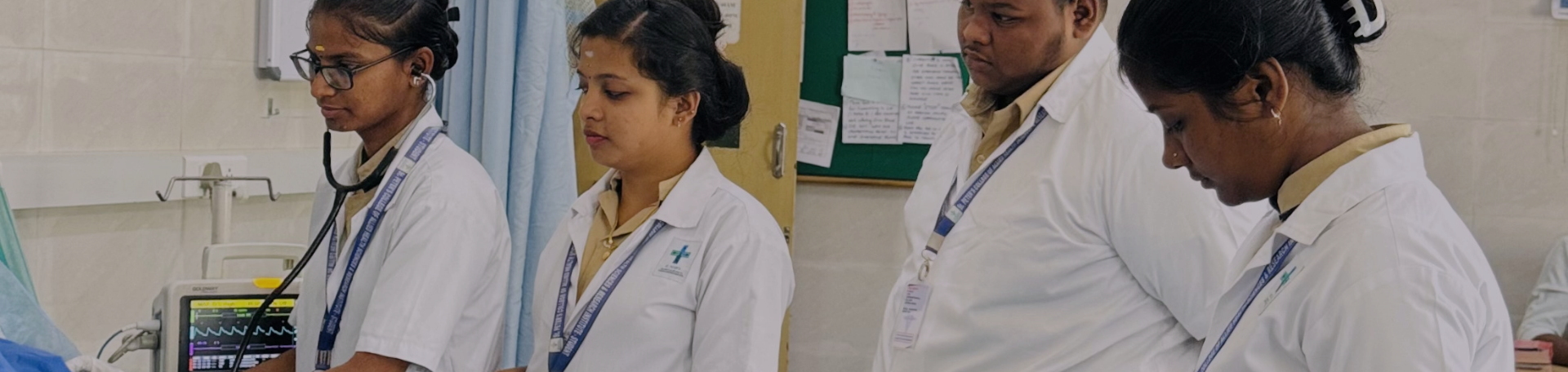
Cardiac Technologists assist cardiologists in diagnosing and treating heart problems and ailments. The areas in which training is provided include ECG, Echo, 24-hour ambulatory ECG monitoring (Holter), 24-hour blood pressure monitoring (Ambulatory BP), treadmill, cardiac catheterization laboratory and electro physiology. Cardiac technologists assist in cardiac catheterizations (Angiogram including balloon angioplasties) and pacemakers. Cardiac technologists are part of the healthcare team in diagnosing and treating cardio vascular diseases
Non communicable disease, especially heart attacks are a major cause of morbidity and mortality not only in India but worldwide. This is the best time to enroll in this programme where the graduates will obtain broad based theoretical knowledge and up-to-date practical training in the current Cardiac Clinical Practice. The career opportunities are diverse with a huge choice of employment in the following areas.
Apart from this, candidates wanting an academic career can enroll in a post-graduate programme in Cardiac Technology and be a “train the trainer” for a satisfying teaching and academic career
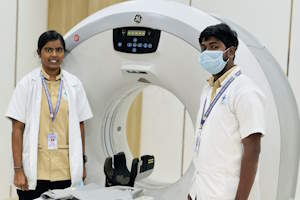
The 4-year B.Sc., Radiography & Imaging Technology program equips students with the skills to
diagnose various diseases and disorders in the human body using imaging technology. In addition,
this course will give students insights into how radiology and imaging technology are used within
medical care units to precisely diagnose patients & ailments.
The module is designed to train students in physics related to radiology, radiographic and
diagnostic imaging techniques, radiographic photography and image processing.
Under the flagship of the St. Peter’s Medical College and Hospital, the course emphasizes a modern medical curriculum to equip graduates with the knowledge, skills and values essential for a confident medical career in the 21st century.
Following are the key features of the B.Sc., Radiography & Imaging Technology program.
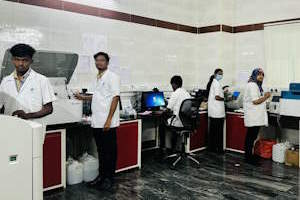
The BSc in Medical Laboratory Technology in St. Peter’s College of Allied Health Sciences & Research Institute is a 4-year undergraduate allied health program divided into 3years and one year of internship. It provides practical and theoretical knowledge on diagnosing, treating, and preventing various diseases and health problems using clinical laboratory tests. Throughout the programme, students perform diverse and multi-level functions in the areas of collecting, processing, and analyzing biological specimens and other substances, principles and methodologies, performance of assays, problem solving, troubleshooting techniques, correlation of clinical procedures and results, principles and practices of quality assessment for all major areas: clinical chemistry, hematology, microbiology, immunology, blood banking, cytology and molecular biology practiced in the contemporary clinical laboratory.
At the completion of B.Sc., MLT program, students will be able to:
Following are the key features of the Medical Lab Technology program
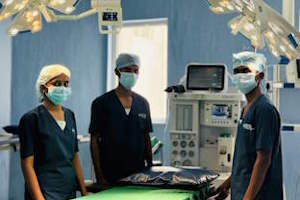
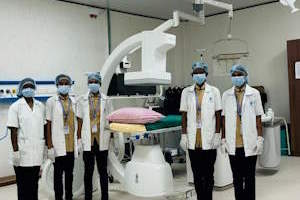
The 4-year B.Sc., Operation Theatre & Anaesthesia Technology is an allied health professional
course. It aims to train students with clinical exposure in operation theatre management,
disinfection, sterilization, responsibilities in anesthesia, and maintaining all the instruments used
in the operation theatre before and after procedures.
At the end of the course, the students can choose the right anesthetic medications, anesthetic gases,
relevant surgical instruments, and sterilization necessities during surgery.
After completing the course, a technologist may assist the specialized clinicians/experts at
hospitals. The main objective of this program is to equip graduates with the knowledge, skills, and
values essential for a confident medical career in the 21st century.
Following are the key features of the B.Sc., Operation Theatre & Anaesthesia Technology program.
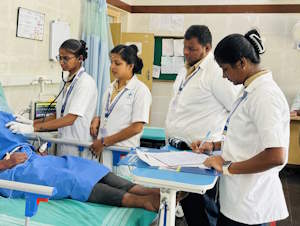
The 4-year B.Sc., Accident and Emergency Care Technology is a UG program. It involves the
study of disease processes and specific procedures and medical skills to handle emergency/
traumatic/ critical cases.
Emergency medicine is a field of practice based on the knowledge and skills required for the
prevention, diagnosis, and management of the acute and urgent aspects of illness and injury
affecting patients of all age groups with a full spectrum of undifferentiated physical and behavioral
disorders.
It is a specialty in which time is critical. The Emergency Medical team takes care of a patient
presenting with acute emergencies. The curriculum is developed to educate students and transform
them into highly skilled Emergency medical technologists.
Following are the key features of the B.Sc., Accident and Emergency Care Technology
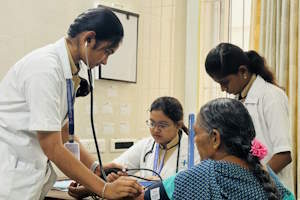
Physician assistants (PA) examine, diagnose, and treat patients under the supervision of a physician. Physician assistant program includes classroom and laboratory instruction in basic science subjects (Anatomy, Physiology, Biochemistry, Microbiology, Pathology and Pharmacology) and the core part of this program includes supervised clinical training in several specialties, such as general medicine, emergency medicine, cardiology, surgery, and several other clinical departments. A graduate who has successfully completed this program can be employed in a forementioned clinical settings.
This program will prepare physician assistant students/candidates capable of:
Approaching a patient of any age group, in any setting, to elicit a detailed and accurate history,
perform an appropriate physical examination, delineate problems, record, and present the data.
Acquiring skills in recognizing deviations from the normal, common laboratory, radiologic,
cardiography and other diagnostic procedures that are used to identify pathophysiological
processes.
Assisting the physician in assessing patients in the inpatient and outpatient clinics, developing, and
implementing patient management plans, recording patient progress, assisting in the provision of
continuing care and helping patients cope with illness and injury with education and counseling.
Performing specific routine technical and surgical procedures, assisting with more complex
procedures, and taking initiative in performing evaluation and therapy in response to life
threatening situations.
Conveying an understanding of the multi-dimensional role of the physician assistant,
demonstrating professionalism in service to the profession and the community.
Following are the key features of the B.Sc., Physician Assistant program.